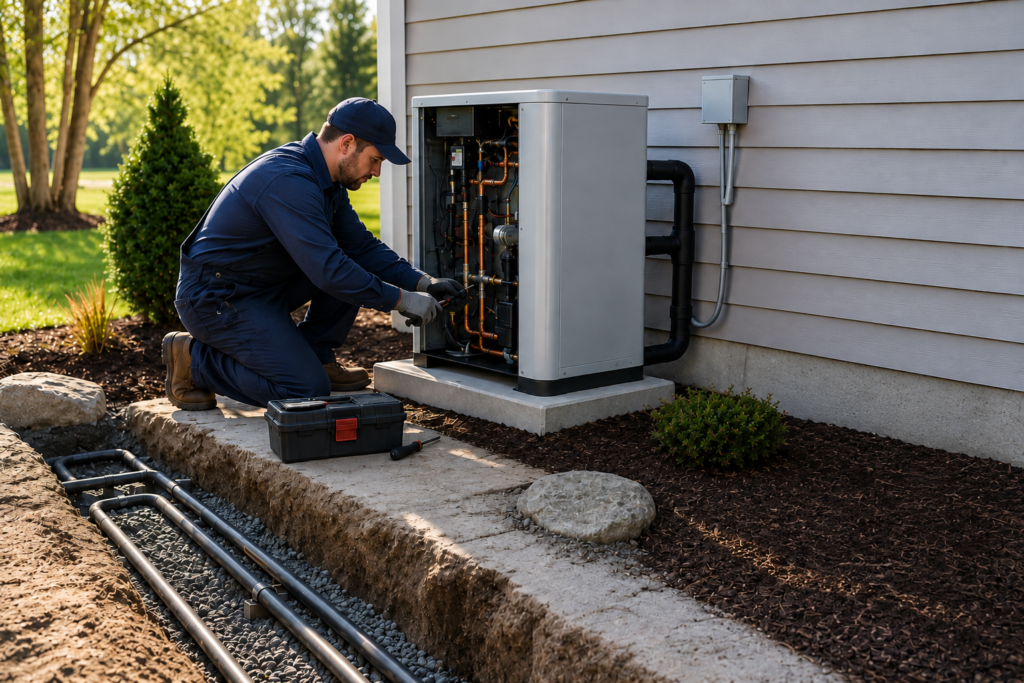
Geothermal heating systems offer an efficient way to heat and cool a home by using the stable temperature found beneath the ground. However, installing a geothermal system involves more than simply purchasing a heat pump. Homeowners may need underground loop installation, excavation, ductwork modifications, electrical work, permits, and other preparation depending on the property. This is why many homeowners begin researching geothermal heating installation costs before deciding whether this system is the right choice for their home. At Florida Mechanical A/C Services, our goal is to help homeowners understand their heating options and make informed decisions about efficient, long-term comfort.
In 2026, the cost of geothermal heat pump installation can vary significantly depending on system capacity, loop type, property size, soil conditions, excavation requirements, labor, and ductwork modifications. Homeowners can expect an average installation cost of around $15,200, while overall project costs can range from approximately $4,500 to $49,000. Smaller systems and simpler installations may cost less, while larger homes, difficult excavation, vertical loops, and extensive property modifications can significantly increase the final price.
Why Is There Such a Wide Price Range?
The final cost of geothermal heating installation is not fixed because every property has different heating requirements and installation conditions. It is not a simple one-price service but rather a combination of several important elements that affect the total project cost.
These include:
- The size and heating capacity of the geothermal system
- The type of ground loop system selected
- The size and layout of your property
- Soil conditions and excavation requirements
- Labor and installation requirements
- Ductwork modifications or new ductwork
- Permits, electrical work, and site preparation
Unlike a standard heating system replacement, geothermal installation requires work below or around the property to transfer heat between the ground and the home. If the property has limited space, rocky soil, difficult access, or extensive ductwork requirements, the project can become more complex and expensive.
That is why understanding geothermal heating installation costs in 2026 is important before starting the project. This guide helps homeowners understand realistic pricing, common system costs, and the factors that influence the final installation bill.
The 7 Key Factors That Decide Geothermal Heating Installation Cost
The average installation cost may look straightforward, but the actual investment depends on several different conditions. Every home has different heating requirements, property layouts, soil conditions, and installation needs, which means each geothermal project can have its own pricing structure.
1. Geothermal System Capacity
The size of the geothermal heat pump is one of the first factors that affects installation cost. Geothermal systems are measured by tons of capacity, with larger homes generally requiring larger systems.
Typical equipment costs by capacity can include:
- 1 Ton: $2,500 – $8,000
- 2 Tons: $5,000 – $16,000
- 3 Tons: $7,500 – $24,000
- 4 Tons: $10,000 – $32,000
- 5 Tons: $12,500 – $40,000
A professional installer should determine the correct system size based on the home’s square footage, insulation, layout, climate, and heating and cooling requirements. Choosing a system that is too small or too large can affect comfort, efficiency, and operating costs.
2. Type of Ground Loop System
The type of geothermal loop system can have a major impact on the overall installation price. The available property space, soil conditions, water access, and excavation requirements all help determine which system is appropriate.
Horizontal Loop: $15,000 – $34,000
Vertical Loop: $20,000 – $38,000
Pond Loop: $10,000 – $32,000
Open-Loop System: $10,000 – $28,000
Horizontal systems generally require more open yard space because the underground piping is installed across a larger area. Vertical systems can work better when space is limited but may require deeper drilling, increasing installation complexity and cost.
3. Labor and Installation Costs
Labor is another major part of the total geothermal installation budget. Geothermal projects require specialized knowledge because the installer must properly size the system, install the ground loop, connect the heat pump, and ensure the entire system operates correctly.
Installation Labor: Often accounts for approximately 50% – 70% of the total project cost
Ductwork Installation: $1,400 – $5,600
Permits: Approximately $100 – $650 for many heat pump projects
The amount of labor required depends on the system type, property conditions, excavation, drilling, ductwork, and accessibility. Projects involving difficult ground conditions or major modifications generally require more labor and specialized equipment.
4. Yard Work and Excavation
Geothermal systems require underground piping, which means the condition and accessibility of the property can have a significant effect on the final cost.
Typical Yard Work: $5,000 – $15,000
Excavation: $1,550 – $6,300
Soil Testing: $600 – $2,000
Regrading: $1,000 – $3,300
Trenching: $5 – $12 per linear foot
Rocky soil, difficult terrain, limited equipment access, or a small yard can make excavation more complicated. A property that requires extensive digging, trenching, drilling, or grading may therefore have a higher installation cost.
5. Home Size and Heating Requirements
The size of the home directly affects the capacity of the geothermal system needed. Larger homes generally require more heating and cooling capacity, which can increase equipment, loop, and installation costs.
For example, a home around 2,000 square feet may require approximately a 3-ton system, while a 2,500-square-foot home may require around 4 tons. A 3,000-square-foot home may require approximately 5 tons, depending on insulation, climate, layout, and other heating and cooling requirements.
The correct system size should be determined through a professional load calculation rather than square footage alone. Proper sizing helps maintain consistent indoor comfort while avoiding unnecessary energy use.
6. Ductwork and Existing HVAC Setup
The condition of the home’s existing ductwork can also influence geothermal installation costs. Some homes may only require minor modifications, while others may need significant ductwork installation or replacement.
Ductwork Installation or Modification: $1,400 – $5,600
Older homes may require additional work to connect the geothermal system properly to the existing air distribution system. New construction can sometimes make ductwork installation easier because walls, ceilings, and floors are more accessible.
If the existing ductwork is damaged, poorly designed, or unable to support the new system, additional work may be necessary before the geothermal installation can be completed.
7. Property Conditions and Installation Accessibility
Every property presents different installation challenges. Yard size, soil type, terrain, available access, local climate, and the location of the geothermal equipment can all influence the final price.
A spacious property with suitable soil may allow a simpler horizontal loop installation. A smaller property may require a vertical system with deeper drilling. Difficult terrain, rocky ground, limited equipment access, or extensive landscaping can increase excavation time and labor requirements.
Local permit requirements and site preparation can also add to the total project cost, making a professional property assessment important before installation begins.
Geothermal Heating Installation Average Cost by System Type
The type of geothermal loop system selected can significantly affect the overall installation budget. The following ranges provide a general comparison of common system types.
| Geothermal System Type | Estimated Installation Cost | Typical Considerations |
| Horizontal Loop | $15,000 – $34,000 | Requires more open yard space |
| Vertical Loop | $20,000 – $38,000 | Works well where yard space is limited |
| Pond Loop | $10,000 – $32,000 | Requires a suitable nearby water source |
| Open-Loop System | $10,000 – $28,000 | Requires an appropriate freshwater supply |
Note: Actual geothermal heating installation costs vary depending on system capacity, property size, soil conditions, excavation, labor, ductwork, permits, accessibility, and local installation requirements. Larger or more complex projects can cost significantly more.
Geothermal Heating Cost by Home Size
Home size is another useful way to understand how system capacity can affect the overall project budget. Larger homes generally require higher-capacity geothermal equipment and may need larger ground loop systems.
| Home Size | Typical Capacity | Estimated Equipment Cost |
| 1,000 sq. ft. | 1.5 Tons | $3,750 – $12,000 |
| 1,500 sq. ft. | 2 Tons | $5,000 – $16,000 |
| 2,000 sq. ft. | 3 Tons | $7,500 – $24,000 |
| 2,500 sq. ft. | 4 Tons | $10,000 – $32,000 |
| 3,000 sq. ft. | 5 Tons | $12,500 – $40,000 |
These figures represent equipment capacity costs and should not be treated as the complete installation price. Excavation, ground loops, labor, ductwork, permits, and other project requirements can add substantially to the final investment.
Is Geothermal Heating Worth the Installation Cost?
The higher upfront cost of geothermal heating can make homeowners hesitate, but the system is designed for long-term efficiency and year-round comfort. Because geothermal systems use stable underground temperatures rather than relying entirely on outdoor air conditions, they can operate efficiently for both heating and cooling.
A properly designed system can also reduce energy consumption compared with conventional heating and cooling equipment. However, the potential value depends on the property’s conditions, installation cost, energy usage, and how long the homeowner plans to stay in the property.
Geothermal Heating Installation Decision Checklist
Still unsure whether geothermal heating is the right investment for your home? Go through this quick checklist. If you answer “Yes” to three or more points below, it may be worth discussing a geothermal installation with a professional.
- You have enough outdoor space for a ground loop system
- Your current heating or cooling costs are high
- You want a heating and cooling system for year-round use
- Your existing HVAC system is aging or requires frequent repairs
- You are planning to stay in your home for many years
- You want to improve long-term energy efficiency
- Your property can accommodate the required excavation or drilling
If you answered “Yes” to three or more questions, a professional geothermal assessment can help determine whether the system is practical for your property and budget.
Why Professional Geothermal Heating Installation Matters
Geothermal heating installation requires careful planning, specialized equipment, and professional workmanship. Incorrect system sizing, poor loop placement, inadequate excavation, or improper connections can reduce efficiency, create performance problems, and lead to expensive corrections. That is why choosing a professional geothermal heating contractor in Boca Raton, FL is essential for achieving reliable and long-lasting results.
This is especially important because every geothermal project depends on property conditions, ground temperatures, soil type, system capacity, loop configuration, and existing HVAC infrastructure. Skilled professionals can evaluate the property, determine the appropriate system size, plan the ground loop, handle installation requirements, and make sure the system operates properly. The focus is always on delivering consistent indoor comfort while helping homeowners get the long-term benefits of geothermal heating.
Conclusion
The cost of geothermal heating installation in 2026 depends on multiple factors including system capacity, loop type, home size, excavation, soil conditions, labor, ductwork, and property accessibility. Homeowners can expect an average project cost of around $15,200, while total installation costs can range from approximately $4,500 to $49,000 depending on the size and complexity of the project.
At Florida Mechanical A/C Services, we help homeowners understand their heating and cooling options and plan efficient HVAC solutions based on their property’s needs. From system sizing and installation planning to professional geothermal system setup, our focus is on reliable workmanship, efficient performance, and long-term indoor comfort.
FAQs
How much does geothermal heating installation cost?
The average installation cost is around $15,200, but the final price depends on the system, property, and installation requirements.
How long does a geothermal heat pump last?
A geothermal heat pump typically lasts around 20 to 25 years with proper maintenance.
Which geothermal loop system is cheapest?
Horizontal and pond/lake systems can be more cost-effective when the property has enough land or suitable water access.
What affects geothermal installation cost the most?
The main factors include loop type, soil conditions, yard size, system capacity, excavation, and ductwork modifications.
Is geothermal heating worth the cost?
It can be worthwhile for homeowners seeking efficient heating and cooling and long-term energy savings, although the upfront installation cost is higher.